The Somatic Ledger: Why Your Body May Be Rejecting Your Current Decisions
There is a kind of exhaustion that sleep does not resolve. It is not the ordinary tiredness that follows effort. It’s also not the predictable fatigue after a demanding week. It is heavier than that. It is more repetitive, more private.
The body begins to signal.

Tightness.
Headaches.
Digestive tension.
Low-grade pain.
Unresponsive fatigue.
A nervous system that no longer settles.
A body that feels as though it is withholding support.
Many high-functioning adults respond by managing the symptoms. They adjust their routines, improve their supplements, book the retreat, optimise the calendar, reduce caffeine, increase movement, and try to restore performance.
Sometimes those changes help, but sometimes they do not touch the source, because the problem is not always a lack of care. Sometimes the body keeps account.
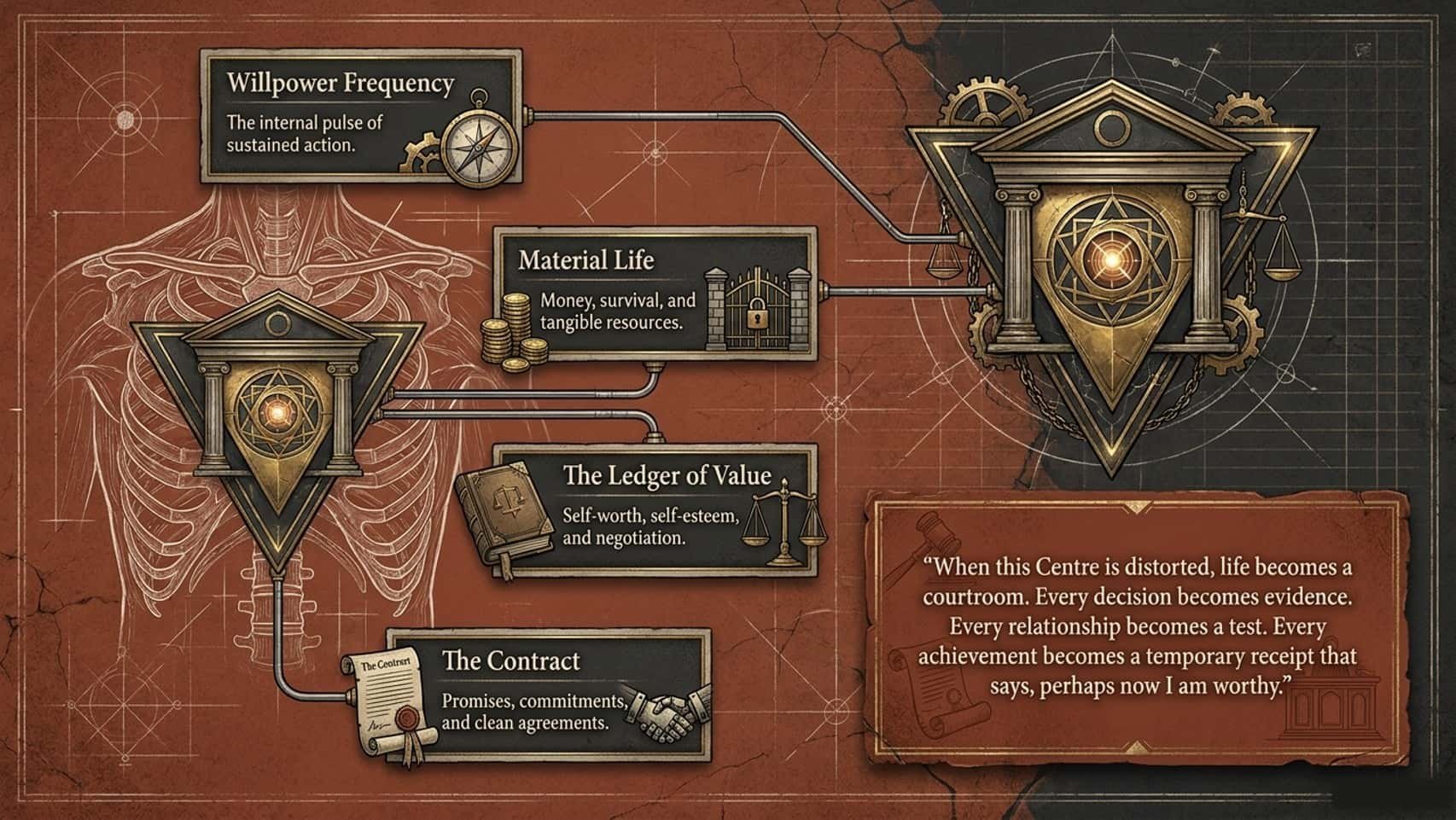
The Body Keeps A Ledger
Every decision has a cost. Some costs are visible immediately. Others are recorded quietly by the body over time:
The job was accepted because it looked secure.
The relationship was maintained because leaving felt disruptive.
Role taken on because people expected it, or
Pace was sustained because stopping would threaten an identity.
The “yeses” given while the body had already said “No” and withdrawn.
The mind may explain these decisions intelligently. It may say they were practical, loyal, sensible, strategic, or necessary, but the body does not measure life that way.
The body measures coherence.
It registers whether the direction is correct for the system. It registers whether energy is being used cleanly or wasted through resistance. Not only that, but it registers whether the person is moving with their own mechanics or forcing themselves through an arrangement that slowly depletes them.
This is the somatic ledger. The body records what the mind justifies.
When Wellness Maintains The Misaligned Life
This is where much conventional wellness advice becomes inadequate. Not useless. Inadequate.
If the life remains misaligned, the body may continue producing signals no matter how well the symptoms are managed.
A better morning routine cannot neutralise a decision your system has been resisting for years. A supplement cannot make an incorrect environment correct. A productivity method cannot resolve the exhaustion created by repeatedly overriding your own authority.
This is not an argument against medical care, rest, nutrition, or emotional support. Those things matter, but they cannot replace a life audit.
For some people, burnout is not simply a recovery issue; it is an alignment issue. In the same way, overthinking a decision is not simply decision paralysis; it is often the conditioned mind trying to force certainty where the body is signalling resistance.
That distinction matters because if the problem is misalignment, more recovery will only help you tolerate what continues to drain you.
The Signal Is Not The Enemy
The body is often treated as the problem. It hurts, tightens, collapses, refuses, protests, or slows down. So the person concludes that the body has failed.
But what if the body is not failing? What if it is reporting?
The body may be showing the accumulated cost of decisions made under pressure rather than authority.
In Human Design, the mind is not considered the place for life decisions. The mind is intelligent. It analyses, compares, interprets, plans, explains, and forms opinions. It has value. But when the mind takes authority over the life, it often chooses from fear, conditioning, image, urgency, or external expectation.
The body then has to live with the consequence. This is where strain begins. Not as punishment. As mechanics.
Pain May Be Data
The point is not to dramatise every symptom or turn discomfort into a spiritual message. The point is more precise. Some forms of somatic discomfort may be data. A persistent heaviness may point towards a commitment that no longer belongs in your direction.
A recurring tension may appear around decisions that the mind keeps trying to rationalise.
A collapse in energy may indicate that the body is no longer willing to fund a life chosen under pressure.
This is not a diagnosis; it is an inquiry. And for the intelligent adult under strain, inquiry matters more than another generic solution.
The question is not only:
“How do I stop feeling this?”
The better question is:
“What decision, environment, pace, relationship, or obligation is my body no longer willing to carry?”
That question changes the entire field.
When The Mind Takes Authority
Most high-functioning adults are praised for their ability to endure: They can push through. Hold responsibility. Stay composed. Solve problems and make things work. That capacity becomes dangerous when it is used to sustain what is wrong for them. The mind may continue negotiating.
It says:
“This is not the right time.”
“Other people depend on me.”
“It would be irresponsible to change this now.”
“I should be grateful.”
“It looks fine from the outside.”
“I can manage.”
And perhaps they can. For a while.
But the body eventually presents the invoice. This is the somatic ledger: the accumulated energetic cost of living through decisions that may have made sense mentally but were never correct mechanically.
The Sovereignty Hijack
Most people are not only tired from making more effort.
They are tired from being moved by forces they have mistaken for their own will.
Fear moves them. Guilt. Blame. Shame. Approval. Comparison. Institutional expectation. The need to prove themselves.
This is how authority is quietly displaced. The person still believes they are choosing, but the environment has already shaped the decision.
That is the sovereignty hijack.
It does not always look dramatic. It often looks responsible.
It looks like the capable person is doing what is expected while their body begins to withdraw from the life being maintained. The danger is not that the external world exists; it will always exist. Family systems. Financial systems. Work structures. Social expectations. Legal realities. Digital pressure. AI-shaped information environments. Collective fear.
The question is not whether you can escape the system. The question is whether your decisions are being made by it.
Sovereign Freedom Inside The System
Living by your design does not remove you from ordinary life.
You still live inside the same structures. You still have bills, relationships, obligations, contracts, timing, uncertainty, and consequences.
Sovereign freedom is not freedom from life. It is freedom from being mechanically driven by what is not you.
When authority is placed in the conditioned mind, the person becomes predictable. Fear can move them. Guilt can move them. Urgency can rush them. Approval can seduce them. Shame can shrink them. Making decisions becomes easily influenced because the pressure points are predictable.
The body’s decision mechanic interrupts that pattern. They return the decision to the individual’s mechanics rather than to the external field. This does not make a person untouchable. It makes them less available to the usual methods of pressure.
That is individual sovereignty in practical terms.
Alignment Is Not Fantasy
Let us be clear. Alignment is not a promise of a perfect life.
Living according to your inner authority, which is certainly not your mind, does not mean the external world becomes calm, people become easy, money becomes effortless, or challenges disappear. That is fantasy.
The difference is not the absence of difficulty. The difference is the absence of unnecessary resistance. A correct path can still be demanding. A correct decision can still require courage. A correct life can still include grief, pressure, uncertainty, and responsibility, but when the decision is correct for the individual, a different quality of resource is often available. The body is not fighting life while trying to live it. That is the distinction.
The Human Design with Gloria Perspective
Human Design with Gloria does not treat decision paralysis and burnout as a generic energy problem. It treats it as a signal. The question is not merely whether you are exhausted. The question is: where in your system are you living, deciding, and spending energy?
If the conditioned mind drives your decision-making, the body may eventually become the place where that misalignment is exposed.
This is where the work begins. Not with motivation, or with another performance routine. Not by forcing yourself back into productivity as is expected of you, but with a more precise audit:
Where is the strain?
What decision pattern keeps repeating?
What pressure has been internalised?
Where has the mind taken authority?
What has the body been signalling for longer than you wanted to admit?
Those questions are not easy. They are structural.
The Threshold
This level of honesty is not comfortable. Many people prefer to manage exhaustion rather than examine the life producing it. They would rather ask for relief than look at the mechanism. That is understandable. It is also expensive.
Because a body repeatedly forced through misalignment does not become more obedient. It becomes louder, slower, tighter, heavier, or less responsive. At some point, the issue is no longer whether you can keep going. The issue is what continuing in the same direction is costing you.
The Somatic Ledger Always Balances
The body is not sentimental. It does not care whether the decision looked impressive or whether the role paid gained approval. It doesn’t care whether the path was logical, respectable, or admired.
It records what was sustainable and what was not.
For the capable adult experiencing burnout whose rest no longer resolves, this may be the more serious question: Not “How do I recover enough to continue?” But: “What has my body been refusing to fund?” That is where the ledger begins to speak.
If this pattern feels familiar, the next step is not making more effort. It is a better orientation.
Explore the Digital Collection privately for audio guidance on pressure, decision-making, and the mechanics beneath exhaustion.